
1. Learning Empathy
|
In Faiz's video, Jill says
“it actually hurts because we feel we can’t do anything to help”. Jill is feeling with Faiz and Ro Gul – she is feeling empathy. |
|
Roman Krznaric, the author of ‘Empathy’, argues that empathy
“.. has the power to transform relationships, from the personal to the political, and create fundamental social change”.
“.. has the power to transform relationships, from the personal to the political, and create fundamental social change”.
|
Neuroscience and other fields of study are now very clear: empathy can be learned. Brené Brown, a researcher, writer and social worker has identified the 4 skills of empathy as:
|
|
Cross- cultural Empathy
Why list Empathy as a core skill in working with people from CALD backgrounds with disability?
David Eagleman is a neuroscientist and he found that when we see someone else hurt, the same neural networks in our brain light up as if we ourselves get hurt. And he found that the more we care about a person the stronger our response is.
“ So we’ve been running an experiment in my lab where … we show six hands on the screen, and then one of those hands gets picked by the computer and you see the hand get stabbed by a syringe needle … The networks in your brain that care about you being in pain light up.”
Next in his experiment he labels those six hands with different religious labels, so Christian, Jewish, Muslim, Hindu, Scientologist or atheist… and he repeats the experiment. It turns out that if you happen to belong to the same group as thelabel on the hand shows, you have a stronger empathic response than if the hand is labelled a group that you do not belong to.
Engleman’s study shows that empathy is an ‘automatic’ response and our ‘automatic’ empathic responses are biased, based on our exposures to everyday biases, prejudices and stereotypes. The great news is now that we know this learned response, we can unlearn it. We can strengthen our empathic skills and become more empathic with practice.
“And so the hope is that the next generation will come to recognise these patterns of dehumanisation, literally dehumanisation because the networks in your brain that care about someone as another human get dialed down, and that the next generation will become more immune to this.”
“ So we’ve been running an experiment in my lab where … we show six hands on the screen, and then one of those hands gets picked by the computer and you see the hand get stabbed by a syringe needle … The networks in your brain that care about you being in pain light up.”
Next in his experiment he labels those six hands with different religious labels, so Christian, Jewish, Muslim, Hindu, Scientologist or atheist… and he repeats the experiment. It turns out that if you happen to belong to the same group as thelabel on the hand shows, you have a stronger empathic response than if the hand is labelled a group that you do not belong to.
Engleman’s study shows that empathy is an ‘automatic’ response and our ‘automatic’ empathic responses are biased, based on our exposures to everyday biases, prejudices and stereotypes. The great news is now that we know this learned response, we can unlearn it. We can strengthen our empathic skills and become more empathic with practice.
“And so the hope is that the next generation will come to recognise these patterns of dehumanisation, literally dehumanisation because the networks in your brain that care about someone as another human get dialed down, and that the next generation will become more immune to this.”
|
Listen to the interview with David Engleman if you like, it's very interesting.
|
Empathy is a great practice to use cross culturally, because when you are being empathic you are connecting your own feelings with similar feelings of another human being. Empathy allows us to consciously connect as human beings, ignoring less important or ‘made up’ differences that divide us.
|
And, if you are interested on creating an ‘empathic civilisation’, take 10 minutes and watch this animated presentation by Jeremy Rifkin.
|
|
Ways to welcome
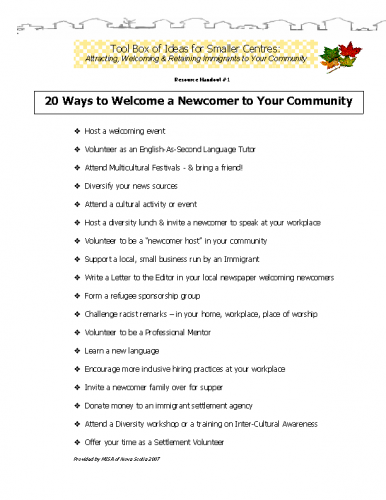
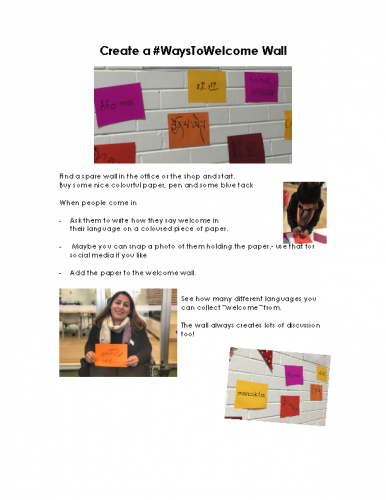
There are many difference ways to welcome. You probably have loads of ideas already. Here are two documents for you to download, if you are looking for some more ideas:
|
|
Another attribute that is valued across cultures is trust.
Check out how Abdul-Karim and Benny have built a trusting relationship over time on the next page.
Check out how Abdul-Karim and Benny have built a trusting relationship over time on the next page.